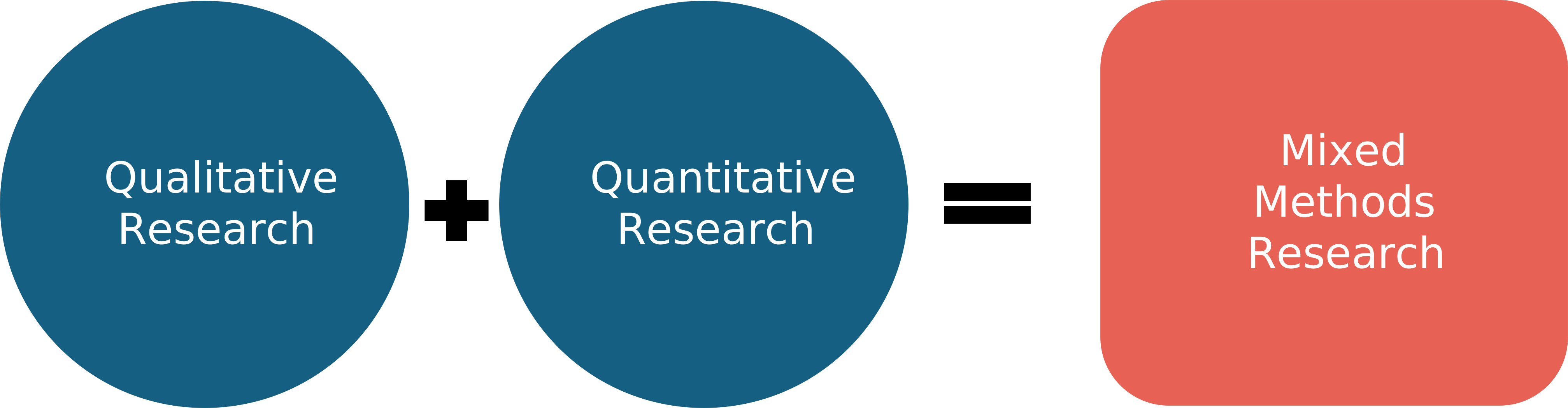
Understanding Safety Through Mixed Methods
In high-risk industries such as aviation and aerospace, understanding human behaviour is central to safety. While technology, procedures, and regulations continue to evolve, people remain at the core of decision-making in complex, time-pressured environments. Yet research and safety initiatives too often rely on a single lens, either quantitative metrics or qualitative insight, missing the full picture of risk.
Mixed methods research addresses this gap by intentionally integrating multiple ways of knowing. While quantitative data can highlight where risk may be emerging, qualitative insight provides the depth needed to understand how and why those risks take shape. Through interviews, survey data, and lived experience, qualitative approaches highlight operational pressures, cognitive workload, organizational culture, and the real-world conditions under which decisions are made. Together, these perspectives allow risk to be understood not just as a pattern in the data, but as a human experience embedded within complex systems.
In aviation and aerospace, safety decisions are rarely simple, and neither is human behaviour. Numbers alone can tell us what is happening, cannot fully explain why. Narratives and lived experience provide depth and meaning, but without scale or structure, they may lack generalizability. Mixed methods research bridges this divide, offering a more complete understanding of who is at risk, why they are at risk, and what actually needs to change.
At Presage, our behavioural risk management approach is grounded in this integration. By combining advanced statistical frameworks with real-world human insight, we help organizations move beyond compliance-driven metrics toward proactive, people-centred safety solutions. Our work supports defensible decision-making by ensuring that behavioural insights are not only meaningful, but methodologically rigorous and operationally relevant.
In complex systems, safety cannot be managed through quantitative data alone—nor through experience in isolation. It requires integration, interpretation, and a deep understanding of human behaviour within the systems people operate every day.