Situational Awareness as a framework for commercial driving safety
Commercial motor vehicle crashes represent a costly challenge for the trucking industry and insurers. Most of these crashes are attributable to human factors such as recognition errors, decision errors, and lapses in hazard perception [1]. The most salient factors that contribute to commercial driving safety are:
• Pre-trip inspections of equipment
• Road scanning behaviour, anticipation, and mental models of potentially hazardous situations
• Driver experience
• Safety culture and company support during training
• Self-reporting and self-management during training
These factors are recognized by the relevant regulating bodies and have recently led to new training requirements such as MELT (Mandatory Entry-Level Training) and ELDT (Entry-Level Driver Training) in Canada and United States, respectively. However, recent reports point out that these programs are not sufficient to fully prepare drivers to operate heavy trucks in all conditions [2]. Furthermore, insufficient emphasis on hazard anticipation in training means new drivers are poorly prepared to spot and respond to the critical cues that prevent accidents.
Studies have found that truck drivers with less than three years of experience have a greater likelihood of being involved in a collision, which underscores the importance of proper training [2]. As new drivers enter the industry to replace the retiring workforce, the cost of insurance is likely to increase unless remedial steps are taken [3]. Some of the important interventions in a commercial driving training program include company support in terms of skills assessment, monitoring, personalized coaching, and feedback [1]. One-on-one discussions with an experienced driver has been found to be effective in reducing driver errors [3]. Moreover, nearly all safety countermeasures rely on a strong safety culture [4]. However, scaling these interventions to meet the needs of individual trainees and fleet sizes remains a challenge.
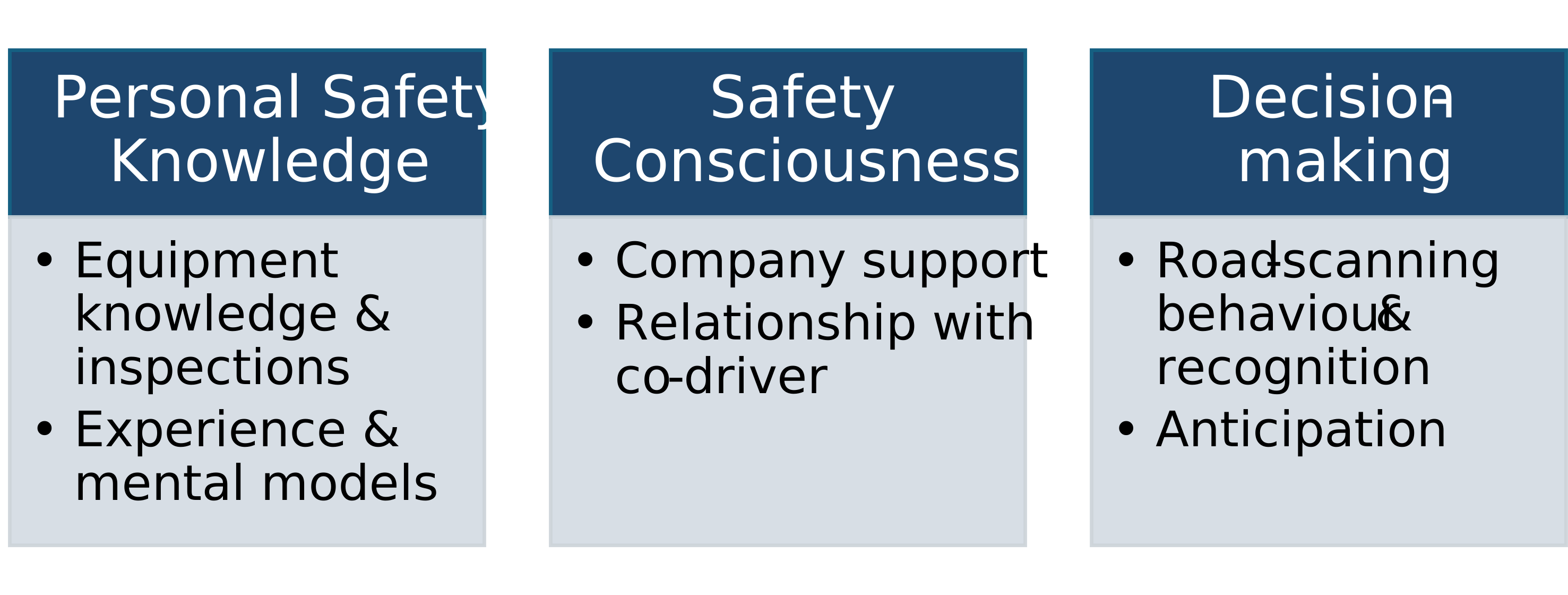
At Presage, we pride ourselves with decades of experience in studying, understanding, and positively transforming situational awareness and organizational safety culture. Presage methodology divides situational awareness into three aspects of personal safety knowledge, safety consciousness, and decision-making.
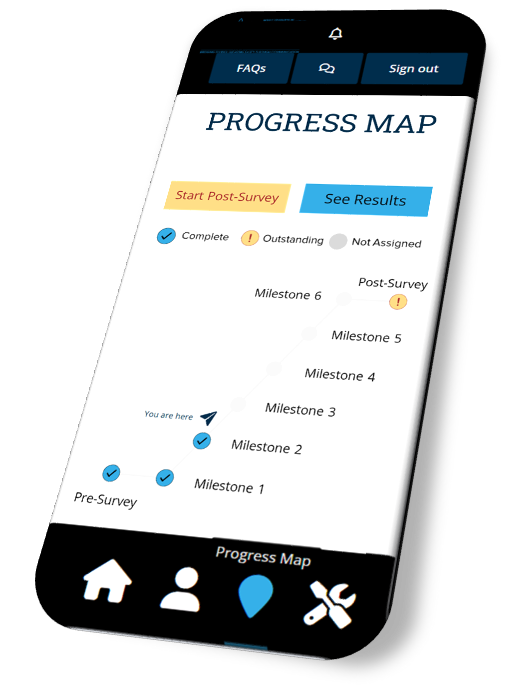
We are actively developing an application that measures several aspects of situational awareness in the context of commercial driving training. Large-scale aggregation of drivers’ situational awareness scores can be hugely beneficial to fleet managers and individuals for employing the appropriate mitigation strategies. The Presage application can address the challenge of scaling personalized coaching and feedback for large and small carriers and fleets. It would help training institutes and carriers to invest time and resources in mitigation strategies for trainees and trainers as proposed by the application.
Interested in working with us to improve your fleet safety? Click 'Work with us' above or send an email to info@presagegroup.com today.
[1] M. F. Smidt, D. Mitchell, and K. K. Logan, “The Potential for Effective Training of Logging Truck Drivers,” J. Agric. Saf. Health, vol. 27, no. 1, pp. 29–41, 2021, doi: 10.13031/jash.14084.
[2] “Urgent Action Needed for Commercial Truck Driver Training.” Accessed: Feb. 27, 2026. [Online]. Available: https://www.ibc.ca/news-insights/news/urgent-action-needed-for-commercial-truck-driver-training
[3] MNP, “Commercial Trucking Insurance and Education,” Insurance Bureau of Canada, Apr. 2024.
[4] M. C. Camden, J. S. Hickman, and R. J. Hanowski, “Reversing Poor Safety Records: Identifying Best Practices to Improve Fleet Safety,” Safety, vol. 8, no. 1, p. 2, Dec. 2021, doi: 10.3390/safety8010002.